Secure payments with Klarna | Sign up to our inspirational newsletter
Choose your language


- Your choice will change the currency too.
- Enjoy free delivery for orders over 1000 SEK.
- 30 day return policy


Secure payments with Klarna | Sign up to our inspirational newsletter

We've created a world where more and more things are becoming easier. Yet among all these conveniences, there's something still worth exploring: the satisfaction of understanding, creating and knowing how to do things for ourselves.
Imagine planting a seed. You look after it, learn what it needs and wait. Perhaps something goes wrong along the way, so you try again.
Then one day, the first leaves appear. It’s a small thing, but the experience can feel surprisingly meaningful. Not simply because something has grown, but because you’ve helped make it happen.
Research offers some insight into why experiences like these can be so rewarding.
Psychologists Edward Deci and Richard Ryan developed Self-Determination Theory, which identifies three basic psychological needs:
Autonomy: Feeling that we have a say in our own actions and decisions.
Competence: Feeling capable of learning, understanding and meeting challenges.
Relatedness: Feeling connected to others and having a sense of belonging.
When these needs are met, they are associated with stronger motivation and greater psychological well-being. [1]
Of course, this doesn’t mean everyone needs to grow their own food, build their own furniture or repair everything they own. But it does give us reason to value activities that allow us to use our abilities, make decisions and develop through experience.
Perhaps independence isn’t about having to do everything ourselves. It’s about knowing we’re capable of more than we might think.
Our lives have changed enormously, but we’re still human beings with a need for movement, rest, connection and engagement with the world around us.
Nature can play an important part in meeting those needs.The World Health Organization (WHO) has reviewed research showing how access to green spaces can support both physical and mental health, including by providing opportunities for physical activity, social interaction and recovery from stress. [2]That doesn’t mean a walk in the forest will solve all of life’s problems. It does, however, remind us that nature has something valuable to offer, even in a modern society.
And connecting with nature doesn’t always mean hiking through untouched wilderness or climbing a mountain. It can be much closer to home: a few plants growing on a balcony, working with natural materials or tending a garden and watching it change with the seasons.
Nature isn’t simply somewhere we go. It’s part of the life we live.
Another interesting area of research explores the relationship between gardening and well-being.
A research review published in 2024 brought together findings from 40 previous research reviews examining gardening and horticultural activities.
Overall, the researchers found positive effects on outcomes including well-being and quality of life, although they also noted considerable variation between studies. [3]
Gardening brings together several things we believe are valuable. It gets us moving, gives us opportunities to learn through experience and encourages us to pay attention to our surroundings. As we care for what we’ve planted, we can also see how our actions influence what happens next.
Perhaps that’s part of what makes harvesting your first tomato, preparing a meal from scratch or finally mastering something you once found difficult so satisfying.
You come away with more than a result. You gain an experience, and something you’ve learned stays with you.
It’s easy to romanticise the past, but life wasn’t necessarily better when people had to manage more things on their own. Technology, specialisation and modern systems have given us opportunities and security that deserve to be appreciated and built upon.
At Veta, we don’t see modern life and our human nature as opposing forces.
We believe the future can be even better when technological progress and an understanding of our fundamental human needs work together. We don’t need to be self-sufficient to appreciate the experience of growing something, just as we don’t need to give up technology to become curious about how things work.
Nor do we believe you have to change your entire life to discover more of what makes it meaningful.
The idea isn’t to make life harder. It’s to discover more possibilities within the life we already have.
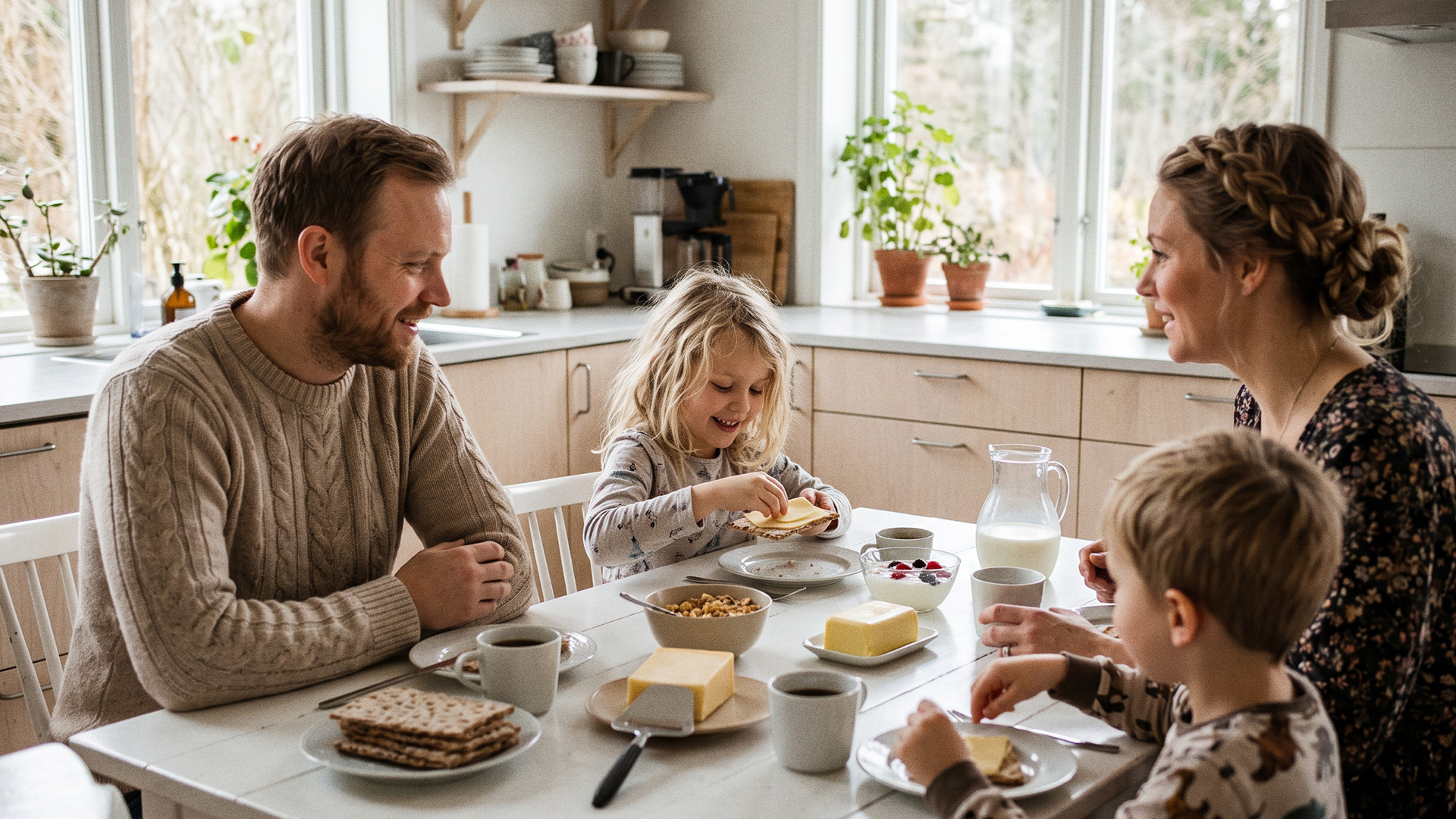
We believe food is a natural place to begin. It’s part of our everyday lives, yet it’s easy to lose sight of everything that happens before it reaches our plates, and what happens after we’ve finished eating.That’s why we launched ReFood, a concept within Veta Sapiens that encourages us to appreciate our food and better understand where it comes from, how it grows and how we can take care of it.
Through ReFood, we want to help people build a closer relationship with food by exploring four stages of its cycle:
Growing, storing, preparing and enjoying food, while also taking care of what remains, are at the heart of ReFood. The idea isn’t that everyone should do everything themselves. Rather, by understanding more of the food cycle, we can become more involved in it and reconnect with nature and our own place within it.
It might begin with a single edible plant on your windowsill or a meal made from ingredients you already have at home.
Small actions can lead to new experiences, and those experiences can open up possibilities we hadn’t considered before.
We don’t know exactly what the society of the future will look like, but we believe in our ability as humans to learn, adapt and grow. Our relationship with nature can help us recognise more of the possibilities already available to us.That’s one of the reasons Veta Sapiens exists.
Not because we need to become someone else, but because there’s still so much to discover in what we’re already capable of.
Reconnect with nature. Discover ReFood – a first step towards a closer relationship with food and nature’s cycles.
[1] Ryan, R. M. & Deci, E. L. (2000). Self-Determination Theory and the Facilitation of Intrinsic Motivation, Social Development, and Well-Being. American Psychologist, 55(1), 68–78.https://doi.org/10.1037/0003-066X.55.1.68[2] World Health
Organization, Regional Office for Europe (2016). Urban green spaces and health.https://www.who.int/europe/publications/i/item/WHO-EURO-2016-3352-43111-60341[3]
Panțiru, I. et al. (2024). The impact of gardening on well-being, mental health, and quality of life: an umbrella review and meta-analysis. Systematic Reviews, 13, 45.https://doi.org/10.1186/s13643-024-02457-9